









Wall Street is plowing deeper into industrial outdoor storage, pushing deal sizes to new highs even as the trucking sector, one of IOS’ traditional demand drivers, weathers a prolonged contraction.
The trucking industry is coping with a labor shortage and high diesel prices that cut into bottom lines, but a surge in demand among data center developers, combined with chronic undersupply of IOS lots, has investors willing to pony up for the properties.
“It’s just more institutionalization of the space in general as more people realize the investment thesis is sound,” said Matt Hunsucker, founder of industrial outdoor storage newsletter IOS List.
A record $672M deal between Realterm and Starwood Property Trust in August underscored the hunger to invest in niche property types such as truck yards and heavy equipment storage depots.
The companies refinanced a 78-property portfolio encompassing 830 acres across 33 U.S. markets.
More sources of capital have become comfortable with the IOS space, from small regional banks to CMBS lenders and private capital, according to Max Heiden, co-founder and partner of Catalyst Investment Partners.
Institutional capital now represents 45% of the investment in the space, up from 30% four years ago, according to Matthews’ latest report.
IOS investment reached $14B to $16B in 2025, an increase of 15% from the prior year, according to Matthews data. Deal activity this year is projected to outpace 2025.
Nationwide IOS rents hit $11.07 per SF per month in the second quarter, a 1.6% year-over-year rise, according to CBRE’s Q2 IOS report. Vacancy remains low, at 3.6% nationally, versus 6.5% for industrial overall.
Heiden forecasts there will be twice as many portfolio sales this year as there were in 2025, with new records set in terms of the size of these deals, due to new players pursuing portfolios.
Core-plus money has begun to enter the space, according to Blake Rodgers, principal at Steel Peak, an investment firm that acquires and manages IOS property.
This includes transactions over the past 18 months such as a deal from Clarion Partners funding a 2.3M SF IOS portfolio in March 2025, Stockbridge Partners investing in a Texas portfolio in October, and a move early this year from Apex IOS, backed by Clarion, to acquire property in Jacksonville.
“There’s been a ton of recent trades in the last year,” Rodgers said. “That flywheel is moving faster.”
:quality(75))
As with so many aspects of commercial real estate, the country’s insatiable appetite for data centers is driving demand for IOS.
Data center developers use the lots for construction staging and to store heavy equipment and building materials. They make up about 20% of new demand for IOS, Heiden said.
Tech giants like Google and Microsoft have invested in IOS sites to advance their data center plans. Meta just opened a $1.2B data center project on an Idaho land assemblage that included IOS.
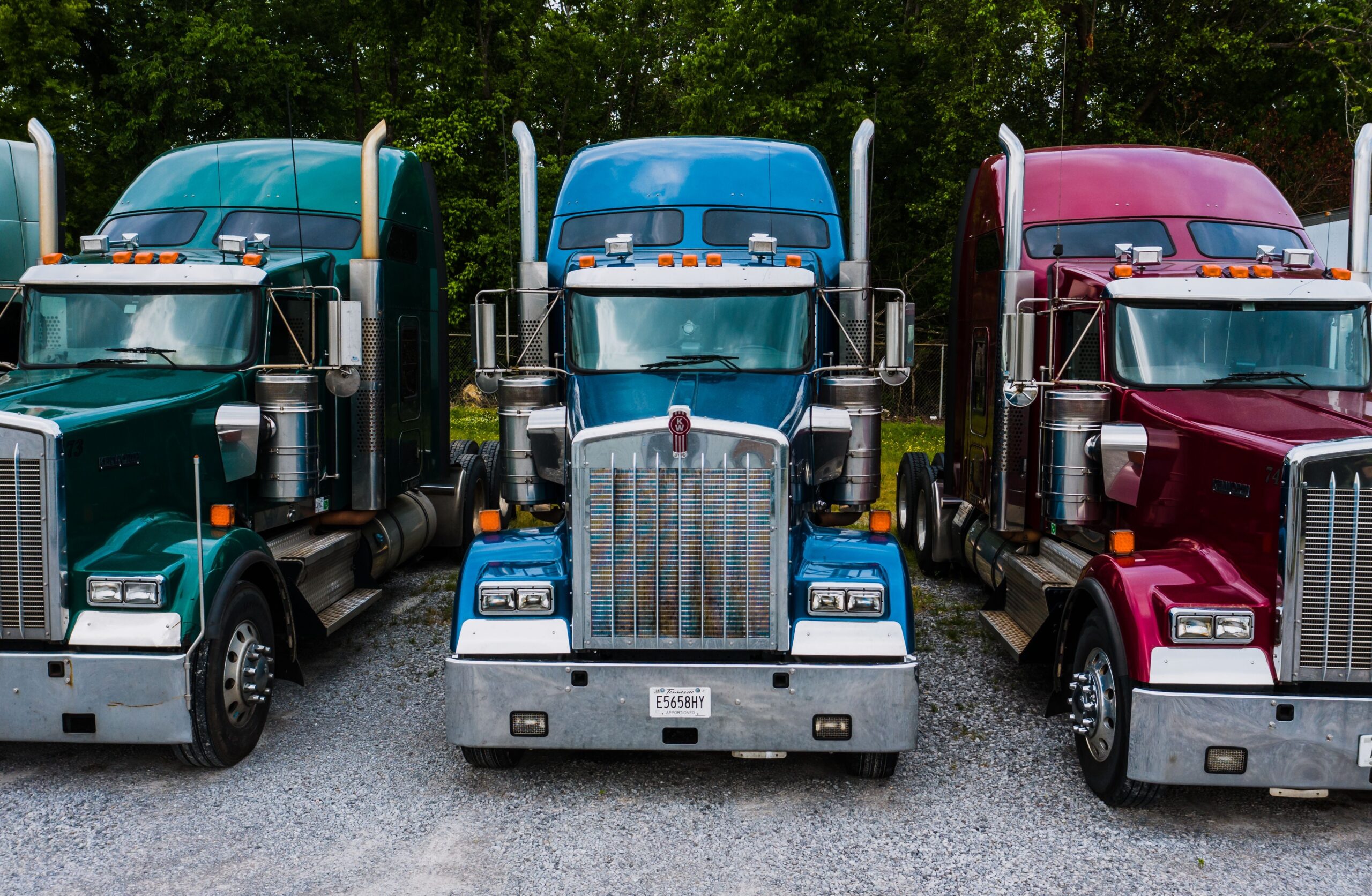
All of this activity comes as the trucking industry, which uses IOS for parking large fleets, suffers from an industry-level recession, rising diesel prices and a labor shortage that has pushed some companies out of business.
“All the carriers are under strain,” Hunsucker said. “There’s just a tremendous amount of churn going on right now, and diesel is definitely not helping.”
The Trump administration’s crackdown on immigrant truck drivers, prompted by its broader immigration agenda and several high‑profile safety incidents, has tightened the labor pool and slowed service.
Transportation Secretary Sean Duffy has moved to shut down about 300 driving schools he says inadequately trained drivers, including more than 100 whose graduates couldn’t meet English‑proficiency standards, while the Department of Homeland Security has stepped up enforcement at weigh stations.
The effort has created a driver shortage and longer service wait times, The Wall Street Journal reported. With so many drivers pulled off the road, carriers have raised shipping rates. But at the same time, some operators are now canceling parking leases as the market adjusts to smaller workforces, which eventually may soften demand.
“We are seeing very modest contractions in our lots, which I think shows the resilience of what we do,” said Cary Goldman, founder and manager of the Timber Hill Group. “But we are hearing it and seeing it a little bit.”
Despite the larger logistics shifts, the benefits of the data center boom for IOS are forecast to continue. Heiden said companies engaged in updating transmission lines as power needs grow may seek to store large spools of wire, for example. Large equipment rental firms could also draft off the demand.
In many places with heavy data center construction of large campuses, these areas can be useful for data center build-outs for years to come.
“It’s definitely one of the hotter, I’d say proven, niches in real estate that groups still continue to want to get into,” Rodgers said.
Source link