










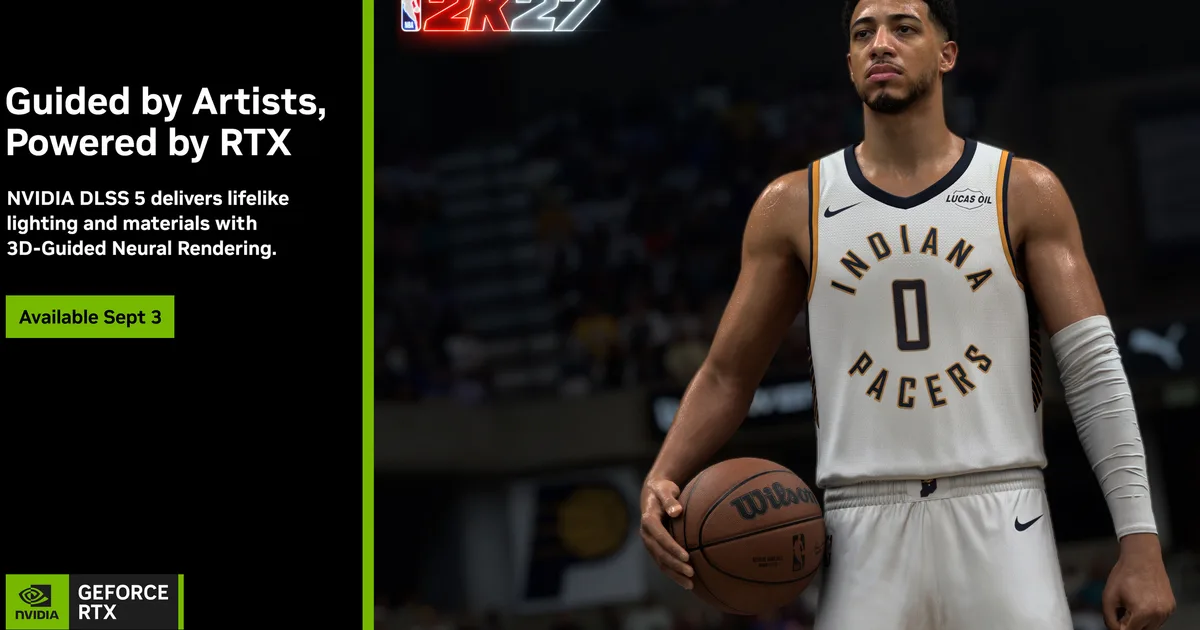
NVIDIA is getting ready to unleash DLSS 5, its latest attempt to push real-time game graphics closer to photorealism. The company says the new 3D-guided neural rendering technology will be available from September 3 at 9 p.m. PT, with NBA 2K27 becoming its first game to support it across RTX 50-series GPUs, laptops and GeForce NOW.
I got a look at DLSS 5 running in NBA 2K27 and the Zorah demo at Gamescom, and I’ll admit: it is considerably more impressive in motion than the initial announcement might suggest.
DLSS 5 isn’t taking the artist out of the equation
When NVIDIA first showed DLSS 5, one of the immediate concerns was that AI-generated visuals could end up overriding the artistic choices made by game developers. Having seen the technology in action, that’s not really what is happening here.
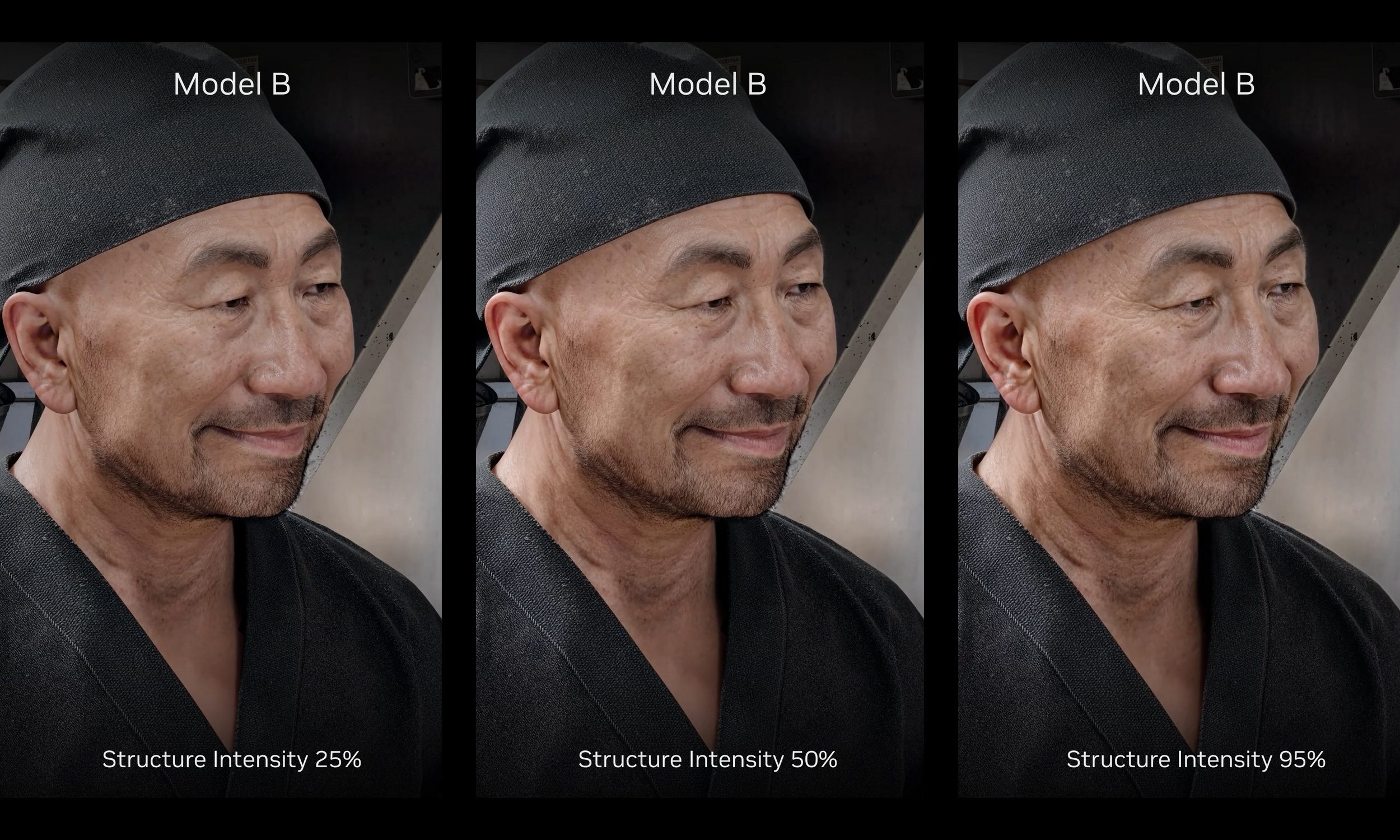
DLSS 5 analyzes the rendered frame along with information such as color and motion vectors, using its neural model to understand characters, objects, materials, lighting and their relationships within a scene. More importantly, developers remain in control of how much of that processing actually happens.


That control goes surprisingly deep. Developers can use automatic or manual masking and adjust the intensity of structural details such as contact shadows, reflections and ambient occlusion, as well as broader lighting and color response. They can also apply those controls globally or to individual objects. In other words, DLSS 5 isn’t simply telling a game, “Here, let me make this prettier.” Artists can decide what gets the AI treatment and how aggressive it should be.


And this is where the technology gets particularly interesting. In the demos I saw, DLSS 5 could distinguish different elements within a scene and treat them independently. A character, their clothing, surrounding objects and the background can effectively become separate pieces that developers can control. The result is a much more convincing interaction between lighting, materials and surfaces.


NVIDIA also emphasizes that the better the input, the better the output. That makes sense: DLSS 5 isn’t conjuring an entire game out of thin air. It is using the information already produced by the game to enhance the final image.
From two RTX 5090s to an RTX 5060 laptop
Perhaps the biggest surprise for me wasn’t even the visual quality. It was the hardware running it. When DLSS 5 was initially shown, the technology required two RTX 5090 GPUs. At Gamescom, however, I saw the technology running on a laptop equipped with an RTX 5060. That’s a pretty wild reduction in hardware requirements for something that is still producing remarkably convincing results.
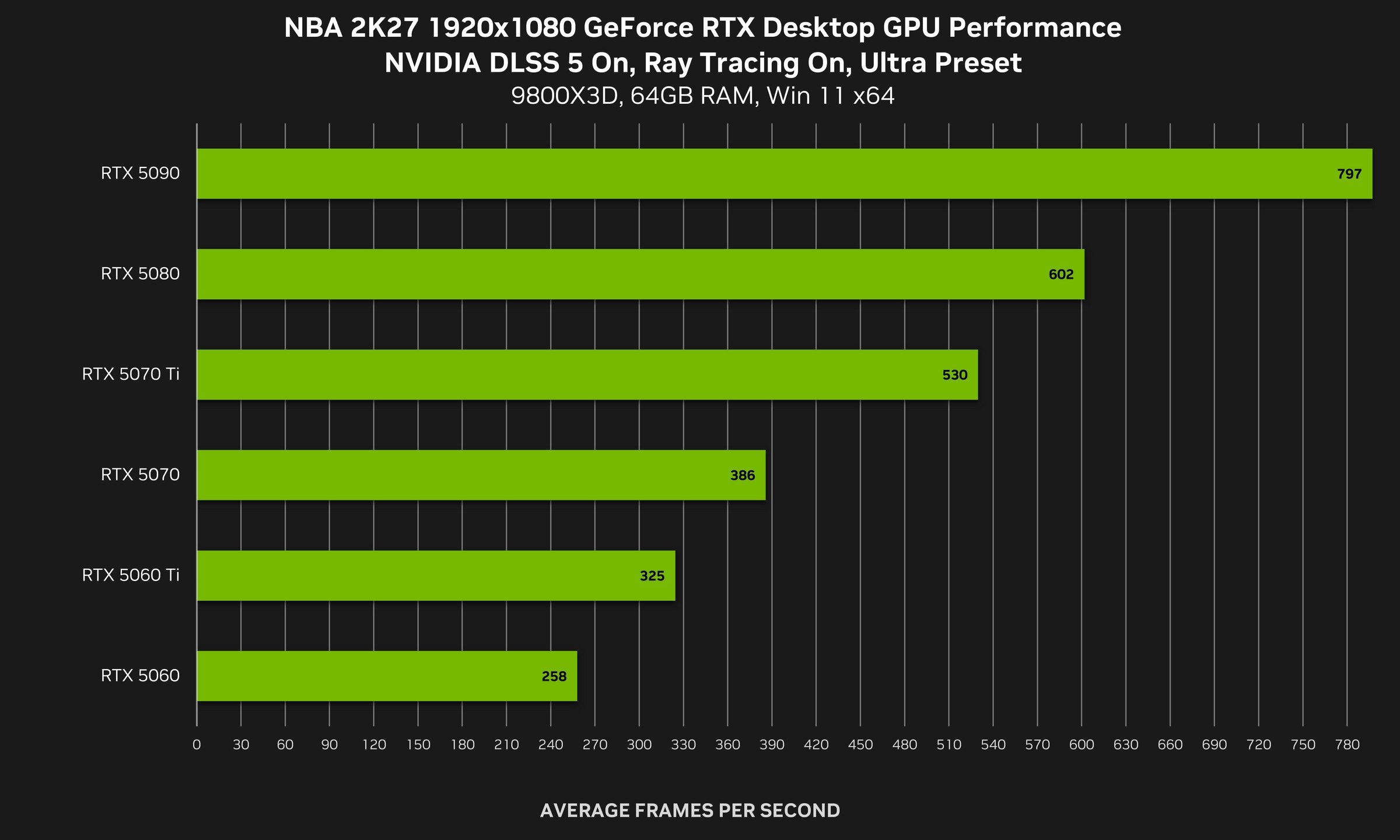
There is a performance trade-off depending on the quality settings, but the visual improvement is hard to ignore. NVIDIA’s own NBA 2K27 figures show DLSS 5 running alongside ray tracing and DLSS Multi Frame Generation, with an RTX 5060 reaching 258 fps at 1080p High settings, while an RTX 5090 reaches 370 fps at 4K Ultra using Performance mode.
And that is probably the part I’m most excited to test properly. DLSS 5 isn’t just another checkbox in NVIDIA’s increasingly enormous graphics-settings menu. From what I’ve seen, it can fundamentally change how lighting, materials and characters appear on screen while still giving developers considerable control over the final image.
NBA 2K27 gets first dibs on September 3. Based on what I saw at Gamescom, I’m very curious to see whether DLSS 5 can consistently deliver that same “wait, that’s actually rendered in real time?” feeling once it leaves the carefully prepared demo environment.
Source link